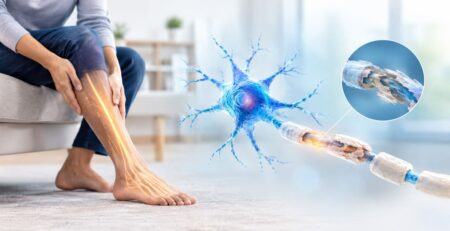
Can Your Smartwatch Really Tell How Your Brain Is Doing?
Wearables cannot currently provide a complete clinical assessment of brain health, but they can capture measurable signals that may provide indirect information about cognition and neurological health. Smartwatches, fitness trackers and specialized wearable sensors can continuously measure patterns such as sleep, physical activity, heart rate, movement, gait and sometimes brain activity. These measurements can be combined into digital biomarkers that researchers are investigating for detecting changes associated with cognitive impairment. However, most wearable-derived cognitive markers remain investigational and should complement, not replace clinical cognitive assessment, medical history and established diagnostic testing.
A smartwatch can count your steps, estimate your sleep and continuously record your heart rate. But can it tell whether your brain is aging well?
That question is driving a rapidly expanding area of digital health research. Traditional cognitive assessments usually provide a snapshot: a person visits a clinic, completes memory or thinking tasks and receives a score at one point in time. Wearables offer something fundamentally different. They can collect information repeatedly, sometimes continuously, while people go about ordinary daily activities.
The goal is not necessarily to put a “brain score” on a smartwatch. Instead, researchers are asking whether subtle changes in everyday behaviour such as sleep fragmentation, reduced activity, altered walking patterns or changes in physiological rhythms, can provide measurable clues about changes in cognitive health. This is where digital biomarkers enter the picture.
What Is a Digital Biomarker?
A digital biomarker is a measurable characteristic derived from digital technologies that can provide information about a person’s health or a biological or behavioural process. In brain-health research, the data may come from smartphones, smartwatches, accelerometers, actigraphy devices, wearable EEG systems or other sensors.
The important distinction is that a wearable does not necessarily measure cognition directly. A smartwatch may measure movement, heart rate and sleep-related signals, for example, while an algorithm may use those signals to estimate patterns associated with cognitive functioning. The measurement is therefore often indirect.
A 2026 Nature Reviews Bioengineering framework describes digital biomarkers as complementary tools that can provide continuous, real-world information between conventional clinical assessments. The field spans conditions including Alzheimer’s disease, Parkinson’s disease, mild cognitive impairment and other neurological disorders.
What Can Wearables Actually Measure?
The most useful wearable signals for cognitive-wellness research are often surprisingly ordinary. Sleep and circadian rhythms can reveal when someone sleeps, wakes, becomes active or experiences fragmented rest. Physical activity can show changes in daily movement, step patterns and overall activity levels. Gait and mobility can provide information about walking speed, variability and other movement characteristics. Heart rate and heart-rate variability can provide physiological information, while some specialized devices can record brain electrical activity through wearable EEG.
These signals matter because cognition does not operate independently of the rest of the body. Sleep, cardiovascular function, physical activity, mobility and neurological function interact continuously. A wearable therefore may not “see” memory directly, but it may capture behavioral and physiological patterns that correlate with how the brain is functioning.
Why Continuous Monitoring Could Change Cognitive Health Research
A conventional cognitive test might reveal that someone’s performance is different today from a previous visit. A wearable can potentially provide information about what happened between those visits.
That difference is important. Cognitive changes may be subtle, gradual and difficult to detect during occasional assessments. Someone might sleep slightly differently, become less physically active, walk more slowly or show greater day-to-day variability long before an obvious problem is reported. Researchers are investigating whether combinations of these small changes can create a more sensitive picture of an individual’s changing health. This approach is sometimes called digital phenotyping: using patterns of real-world behaviour and physiology to characterize health. It does not mean that every behavioural change indicates disease. Instead, the emphasis is on identifying patterns that become meaningful when interpreted alongside clinical information.
Sleep May Be One of the Most Useful Digital Cognitive Signals
Sleep is receiving considerable attention because it has established relationships with memory, attention and overall brain health. Wearables can monitor sleep duration, timing, movement and patterns of nighttime activity, although consumer estimates are not equivalent to clinical polysomnography.
Research increasingly suggests that disrupted sleep and fragmented circadian rhythms are associated with poorer cognitive outcomes. A 2026 systematic review of wearable research involving adults aged 50 and older found that disrupted sleep, circadian fragmentation and irregular activity patterns were repeatedly associated with worse cognitive outcomes. However, the authors also emphasized major differences among devices, study designs and analytical methods. The key point is that a poor sleep score is not a dementia test. It is one piece of information that may become more informative when combined with other longitudinal patterns.
Could Your Walking Pattern Tell a Brain Story?
Gait is another intriguing digital biomarker because walking requires coordination among motor control, attention, balance and executive processes. Researchers can use sensors to examine features such as walking speed, step variability and changes in movement patterns that may be difficult to detect through casual observation.
A 2026 scoping review of digital biomarkers in early Alzheimer’s disease identified rest/activity measures, speech and gait among the most frequently studied domains. Yet only a minority of the studies examined actual diagnostic or prognostic outcomes, demonstrating that the field has a large gap between finding an association and proving clinical usefulness.
A slower walk may reflect many things besides cognition, including arthritis, muscle weakness, cardiovascular limitations, pain, medication effects or environmental factors. The value of a digital gait biomarker therefore comes from interpreting the pattern in context rather than treating one measurement as a diagnosis.
Heart Rate, Physiology and the Brain–Body Connection
Wearables can also capture physiological signals such as heart rate and, on some devices, heart-rate variability. These measures are being explored because cardiovascular and autonomic function interact with brain health.
However, this is another area where interpretation requires caution. Heart-rate variability can change with fitness, stress, sleep, illness, medication, age and measurement conditions. A lower or higher value does not independently indicate cognitive impairment. The emerging opportunity lies in multimodal monitoring, where several signals are considered together. A combination of changing sleep, declining activity, altered gait and physiological changes over several months could potentially provide more information than any single measurement.
What Happens When AI Analyses Wearable Data?
The real technological leap is not simply the sensor. It is the ability to analyse thousands of measurements over time. Machine-learning systems can look for patterns across sleep, activity, physiology and behaviour that may be difficult for humans to recognize. Instead of asking, “What was this person’s sleep score last night?” researchers can ask, “Has this person’s sleep become progressively more fragmented over six months, and does that pattern correspond with changes in cognitive performance?” That shift from individual measurements to longitudinal patterns, is one of the most important developments in digital cognitive biomarkers.
A Major 2026 Study: Can Wearables Passively Predict Cognition?
A 2026 npj Digital Medicine study provides an important example. Researchers followed 82 cognitively healthy adults for 10 months, collecting passive behavioural, physiological and environmental information from consumer-grade wearable and mobile technologies. Participants also completed active assessments across four waves.
The researchers used artificial intelligence to predict 21 cognitive and mental-health outcomes. Passive multimodal information showed meaningful variability in cognition and affect, with environmental and physiological measures emerging as important predictors. Patient-reported outcomes were generally easier to predict than performance-based cognitive outcomes.
The finding is promising because it demonstrates feasibility rather than merely theoretical potential. But the study does not mean that a consumer smartwatch can diagnose cognitive decline. The sample was small, and prediction performance is not the same as clinical diagnostic accuracy.
The 2026 Evidence Base Is Growing; but It Is Still Uneven
A 2026 systematic review of wearable and mobile technologies for early cognitive impairment and dementia included 49 studies involving more than 200,000 participants in total. Most studies used research-grade actigraphy rather than commercial consumer wearables. The review found associations between disrupted sleep, circadian rhythms, activity patterns and cognitive outcomes, while machine-learning studies reported promising classification performance.
Yet the researchers could not conduct a quantitative meta-analysis because the studies varied substantially in devices, outcomes and analytical methods. Small samples, short monitoring periods and limited external validation were recurring weaknesses. Only about one-quarter of the included studies addressed early detection or prevention through longitudinal risk estimation. That distinction is crucial: promising prediction is not the same as validated diagnosis.
Wearable EEG: A More Direct Window Into Brain Activity
Most consumer wearables measure signals outside the brain. Wearable EEG is different because it records electrical activity generated by the brain through electrodes placed on the scalp.
A 2026 systematic review examined 21 studies involving 16 wearable EEG devices for mild cognitive impairment detection. Reported classification accuracy ranged widely from 46% to 95%, illustrating both the potential and the inconsistency of the technology. The researchers identified several factors that may improve performance, including moderate channel density, frontal and parietal electrode placement, multimodal data and improved signal processing.
The variability itself is an important finding. Different devices, electrode configurations, recording protocols, signal-processing pipelines and machine-learning methods can produce different results. Before wearable EEG becomes a routine cognitive-screening tool, these systems need stronger standardization, larger and more diverse populations and validation in real-world settings.
What Is the Difference Between a Wearable Metric and a Clinical Biomarker?
A wearable can generate a measurement without that measurement necessarily being a validated biomarker. For a digital signal to become clinically useful, researchers need to establish what it represents, how reliably it can be measured, whether it changes consistently with a meaningful clinical outcome and whether it improves decision-making. They also need to determine how often it produces false positives and false negatives.
This is particularly important in brain health because many signals are nonspecific. Poor sleep can occur because of stress, shift work, pain, illness or an uncomfortable bedroom. Reduced activity can result from injury. A change in gait can reflect arthritis. A change in heart rate can result from exercise or medication. Context determines meaning.
Can Wearables Detect Alzheimer’s Disease Before Symptoms?
That possibility is being investigated, but wearables should not currently be presented as established tools for diagnosing preclinical Alzheimer’s disease.
A 2026 scoping review identified 109 studies involving people with mild cognitive impairment or mild Alzheimer’s disease and found a large and growing research base around wearable and portable digital biomarkers. However, most studies were descriptive, and relatively few evaluated diagnostic or prognostic performance. The authors specifically identified the lack of evidence linking digital biomarkers to diagnosis and prognosis as a major knowledge gap.
The future may involve wearables acting as early-warning systems that identify patterns worth investigating further, rather than independently declaring that a disease is present.
The Biggest Opportunity May Be Change Over Time
One of the strongest arguments for wearables is not that they can produce a perfect measurement, but that they can establish an individual’s personal baseline.
Imagine that someone’s normal activity, sleep timing and walking pattern remain relatively stable for years. A gradual deviation from that personal baseline could potentially become meaningful even if the person’s absolute values remain within a population-wide “normal” range. Longitudinal monitoring may therefore allow digital biomarkers to become more personalized.
This approach could eventually help clinicians distinguish a temporary fluctuation from a persistent behavioural change. But that possibility still requires validation, particularly across different ages, cultures, health conditions, devices and socioeconomic groups.
The Problem With “Brain Health Scores”
A single number can be attractive because it is easy to understand, but cognitive health is too complex to be reduced safely to one wearable score.
Memory, attention, executive function, processing speed, mood, sleep, mobility, cardiovascular health and social functioning interact in different ways. A person can sleep poorly for a week without having cognitive impairment, while another person may show subtle cognitive changes despite apparently normal wearable metrics.
A responsible digital cognitive-health system should therefore emphasize patterns, trends and context rather than presenting a wearable score as a definitive judgment about brain health.
Privacy Is Part of Brain Health Technology
Digital biomarkers introduce another issue that traditional cognitive testing does not: continuous personal data collection. Wearables can generate detailed records of movement, sleep, location-related patterns, physiological signals and daily routines. When combined with cognitive assessments, these datasets can become highly sensitive.
Trustworthy digital cognitive-health systems therefore need strong safeguards around consent, data security, transparency, access and secondary use. People should understand what is being collected, why it is being collected and who can access the resulting information.
Privacy is not merely a technical concern. If people are uncomfortable being continuously monitored, adherence may fall, and the resulting data may become less representative of real life.
Recent Research Highlights
The most important development in 2026 is the movement from isolated wearable measurements toward multimodal, longitudinal digital biomarkers. Researchers are increasingly combining sleep, activity, physiological signals, environmental information and cognitive assessments and then using AI to identify patterns that may have clinical relevance. The 10-month study of 82 healthy adults demonstrates the feasibility of this approach in real-world conditions.
Another major development is the formalization of digital-biomarker frameworks for neurodegenerative disease. Rather than treating every sensor signal as equivalent, researchers are increasingly asking three separate questions: What is being measured? How is it being measured? And why is it being measured? This framework is helping move the field toward more rigorous clinical validation.
Wearable EEG is also moving forward, but its 2026 evidence illustrates why enthusiasm needs to be matched by standardization. Reported performance varies substantially across studies, and researchers continue to call for larger, diverse cohorts, standardized protocols, real-world validation and transparent reporting.
Recent Clinical Studies & Surveys
Recent reviews consistently show that digital biomarkers are further along in research and risk stratification than they are in routine diagnosis. Wearable studies increasingly associate sleep disruption, circadian irregularity, physical activity and gait characteristics with cognitive outcomes, but relatively few studies demonstrate that these measures can independently improve clinical diagnosis or prognosis.
The emerging clinical model is therefore likely to be complementary rather than replacement-based. Wearable data could provide continuous information between appointments, while cognitive testing, clinical history, neurological examination and established biomarkers provide the diagnostic context.
Key Takeaways
- Wearables cannot currently provide a complete clinical assessment of brain health.
- They can continuously measure signals such as sleep, activity, gait and physiology that may provide indirect information about cognitive health.
- These signals can become digital biomarkers when they are rigorously defined, measured and validated against meaningful health outcomes.
- AI is increasingly being used to identify complex patterns across multiple wearable signals.
- Recent 2026 research supports the feasibility of passive, continuous cognitive-health monitoring.
- Wearable EEG provides a more direct measure of brain activity but remains an emerging research technology.
- A wearable measurement is not automatically a clinically validated biomarker.
- Changes in sleep, gait or activity have many possible causes and should not be interpreted as evidence of dementia by themselves.
- Personalized trends may eventually prove more useful than a single “brain health score.”
- Privacy, data security, standardization and equitable access are essential as digital cognitive biomarkers develop.
- The most realistic near-term role for wearables is likely to be complementary monitoring and risk stratification, not standalone diagnosis.
FAQ (Frequently Asked Questions)
-
Can a smartwatch measure brain health?
A smartwatch cannot directly measure overall brain health. It can measure signals such as activity, sleep-related patterns and heart rate that researchers are investigating as indirect indicators of cognitive and neurological health. -
What are digital cognitive biomarkers?
Digital cognitive biomarkers are measurable signals derived from digital technologies that may provide information about cognition or processes related to brain health. They can include patterns involving sleep, movement, gait, physiology, speech or, with specialized devices, brain electrical activity. -
Can wearables detect dementia?
Not reliably as a standalone diagnostic tool. Research suggests that wearable-derived patterns may help identify people who warrant further evaluation, but current evidence does not support using consumer wearables alone to diagnose dementia. -
Can a smartwatch detect Alzheimer’s disease?
Current consumer smartwatches cannot independently diagnose Alzheimer’s disease. Researchers are studying whether combinations of wearable-derived behavioural and physiological signals could contribute to earlier risk detection. -
Can sleep data predict cognitive decline?
Sleep disruption and circadian irregularity are associated with cognitive outcomes in research, and wearable devices can monitor some aspects of sleep. However, poor sleep has many causes and a sleep metric alone cannot predict whether an individual will develop cognitive impairment. -
What is wearable EEG?
Wearable EEG uses portable electrodes positioned on the scalp to record electrical brain activity. Research is investigating whether these systems can identify patterns associated with mild cognitive impairment, but differences among devices and study methods currently limit clinical standardization. -
What is digital phenotyping?
Digital phenotyping involves using data generated by digital technologies to characterize patterns of behaviour, physiology and health. In cognitive research, it can include information about sleep, movement, activity and other real-world signals collected over time. -
Are wearable brain-health scores accurate?
Accuracy depends on what is being measured and how the score was developed and validated. A consumer wellness score should not automatically be interpreted as a clinical measure of cognitive function or dementia risk. -
Could wearables detect cognitive decline earlier than a clinic visit?
Potentially, but this remains an area of active research. Continuous monitoring may detect subtle changes between clinical visits, although researchers still need stronger evidence showing that these changes improve real-world diagnosis and patient outcomes. -
Should I worry if my wearable shows changes in sleep or activity?
Not necessarily. Changes in wearable measurements can result from stress, illness, medication, pain, travel, lifestyle changes or device-related measurement error. Persistent changes that concern you should be discussed with a healthcare professional rather than interpreted from the wearable alone. -
Will wearables replace cognitive assessments?
That is unlikely in the foreseeable future. Wearables and cognitive assessments measure different aspects of health and may ultimately work best together, with wearable data providing continuous context and structured assessments measuring cognitive performance more directly. -
How could wearables support cognitive wellness?
Wearables may help people become more aware of patterns in sleep, physical activity and daily routines that are relevant to overall brain health. When combined responsibly with cognitive assessments, healthy lifestyle behaviors and appropriate professional guidance, they may become useful components of a broader cognitive-wellness strategy.
DISCLAIMER: The content of this article is intended solely for general informational purposes and is not a substitute for professional medical consultation, diagnosis, or treatment. Always seek the advice of your doctor or another qualified healthcare professional regarding any medical concerns.