Algorithm V/S Imagination: Latter Wins!!
Artificial intelligence is transforming cognitive wellness by improving assessments, personalising interventions and analysing complex health data. However, human expertise remains irreplaceable, providing empathy, ethical judgement, creativity and contextual understanding that AI cannot replicate. Together, AI and human intelligence are shaping the future of brain health.
Why Human Expertise Still Matters: How AI And Human Intelligence Are Revolutionising Cognitive Wellness
ALGORITHM V/S IMAGINATION: DOES FORMER WIN!!
Artificial intelligence (AI) is changing the way we approach healthcare, education and cognitive wellness. From analysing medical images to identifying patterns in cognitive assessments, AI-powered technologies are helping researchers and healthcare professionals better understand how the brain functions and how cognitive decline may be detected earlier. In cognitive wellness, AI is opening new possibilities by delivering personalised recommendations, tracking cognitive performance over time and helping individuals engage with brain-training programmes tailored to their unique needs. These advances are making cognitive support more accessible and data-driven than ever before.
Yet, despite these remarkable developments, one fact remains unchanged: human expertise continues to play a central role in understanding and supporting the human brain. The brain is not simply a collection of data points or algorithms. It is shaped by emotions, experiences, relationships, culture and environment. While AI can analyse information at remarkable speed, it cannot fully understand the complexity of human behaviour, personal values or lived experiences. This is why the future of cognitive wellness lies not in replacing human expertise, but in combining it with the strengths of artificial intelligence.
Understanding Human Intelligence
Human intelligence extends far beyond the ability to solve problems or remember information. It involves reasoning, creativity, emotional understanding, ethical judgement, adaptability and the capacity to learn from experience. Every individual processes information differently. Factors such as education, culture, language, emotions, physical health and social interactions all influence how the brain functions. Human intelligence also allows people to interpret subtle cues, make intuitive decisions and adapt to unfamiliar situations & abilities that remain difficult for AI to replicate. In healthcare, these qualities are especially important because every patient presents a unique combination of symptoms, experiences and personal circumstances.
The Rise Of Artificial Intelligence In Cognitive Wellness
Over the past decade, AI has become an increasingly valuable tool in cognitive health research and clinical practice. Modern AI systems can analyse large volumes of cognitive data in seconds, identify trends that may not be immediately obvious and generate personalised recommendations based on an individual’s performance.
Applications of AI in cognitive wellness include:
- Digital cognitive assessments
- Personalised brain-training programmes
- Monitoring cognitive performance over time
- Early identification of potential cognitive changes
- Predictive analytics for health outcomes
- Adaptive learning platforms
- Virtual cognitive coaching
- Research data analysis
These technologies help make cognitive support more accessible while enabling healthcare professionals to make better-informed decisions.
How AI Is Transforming Brain Health
One of AI’s greatest strengths is its ability to recognise patterns across enormous datasets. Researchers studying cognition often collect information from thousands or even millions of participants. AI can rapidly analyse this information to identify relationships between lifestyle, genetics, sleep, nutrition, physical activity and cognitive performance.
For example, AI can help:
- Detect subtle changes in cognitive performance over time.
- Personalise cognitive exercises based on an individual’s strengths and weaknesses.
- Monitor adherence to brain-training programmes.
- Provide real-time feedback to users.
- Support researchers in identifying risk factors associated with cognitive decline.
Rather than replacing traditional cognitive assessments, these technologies complement them by providing continuous insights that were previously difficult to obtain.
Where Artificial Intelligence Excels
AI has several characteristics that make it particularly valuable in cognitive wellness like;
Processing Large Volumes of Information
Healthcare professionals may review hundreds of patient records, but AI systems can analyse millions of data points within minutes. This capability supports large-scale research and helps identify meaningful patterns across populations.
Personalisation
Many AI-powered platforms adapt automatically to a user’s performance. As individuals improve, exercises become more challenging; if difficulties arise, the system adjusts accordingly. This creates a more personalised learning experience.
Continuous Monitoring
Unlike occasional clinical visits, digital platforms can monitor cognitive performance regularly, providing a clearer picture of how cognition changes over time.
Improved Accessibility
AI-powered digital tools make cognitive assessments and training available to people who may have limited access to specialist healthcare services because of geography, mobility or resource constraints.
Why Human Brain Still Matters?
Despite these impressive capabilities, AI has important limitations. AI can identify patterns and generate recommendations, but it does not understand human experiences in the same way people do. It cannot truly appreciate fear, hope, motivation, cultural values or family dynamics; all of which influence cognitive health and healthcare decisions. Healthcare professionals combine scientific evidence with clinical judgement developed through years of education and practical experience. They recognise when symptoms may reflect emotional stress rather than neurological disease, understand how multiple medical conditions interact and consider personal preferences when developing treatment plans.
Human expertise also becomes essential when situations involve uncertainty. Two people with similar cognitive assessment results may require completely different approaches depending on their health history, lifestyle, emotional wellbeing and personal goals.
This ability to interpret context remains one of humanity’s greatest strengths.
The Human Qualities AI Cannot Replicate
Although AI continues to advance, several uniquely human abilities remain central to cognitive wellness such as;
Empathy
People facing memory concerns or cognitive changes often experience anxiety, frustration or uncertainty. Compassionate communication helps build trust and encourages individuals to seek appropriate support, something AI cannot genuinely provide.
Ethical Decision-Making
Healthcare frequently involves complex ethical questions where there is no single correct answer. Human professionals consider individual values, autonomy and fairness when making recommendations.
Creativity
Humans frequently develop innovative solutions by combining knowledge, intuition and lived experience. Creativity allows clinicians, researchers and caregivers to adapt interventions to each person’s unique circumstances.
Critical Thinking
AI generates outputs based on available data, but humans evaluate those outputs, question assumptions and determine whether recommendations are appropriate for real-world situations.
Recent Studies And Surveys Reinforce The Importance Of Human Expertise
As artificial intelligence becomes increasingly integrated into healthcare, recent studies show that people continue to value human expertise, particularly when making important medical decisions. A 2026 cross-sectional survey of 524 adults in the United States found that 62.8% of participants trusted a physician’s diagnosis based solely on the doctor’s expertise, while only 26.7% preferred a physician who relied on AI as a secondary opinion. The study also reported that 81.1% of respondents were concerned about doctors becoming overly dependent on AI, and 70.2% believed future medical education should place greater emphasis on human-centred skills such as empathy, communication and ethical judgement. These findings suggest that while people recognise AI’s benefits, they still place greater trust in human expertise for complex healthcare decisions.
Another randomised web-based survey involving 1,762 American participants examined how AI-assisted diagnosis influenced public trust in healthcare professionals. Researchers found that although AI was recognised as a valuable support tool, participants consistently expressed higher trust in physicians when clinical decisions remained primarily under human control. The study concluded that successful AI adoption depends on maintaining meaningful human oversight rather than replacing professional judgement.
Research involving healthcare professionals also reflects a similar perspective. A survey published in the Journal of Medical Internet Research, which analysed responses from 845 healthcare professionals, students and academics, found that although most users viewed large language models positively for improving efficiency and productivity, many also reported limitations in the quality and reliability of AI-generated information. The findings reinforce the need for trained professionals to critically evaluate AI-generated recommendations before applying them in healthcare settings.
Collectively, these studies reinforce an important principle in cognitive wellness: artificial intelligence performs best when it augments human expertise rather than replaces it. While AI can rapidly analyse information and identify patterns, healthcare professionals provide the empathy, contextual understanding, ethical reasoning and clinical judgement needed to deliver truly personalised cognitive care.
Human Intelligence And AI: Collaboration, Not Competition
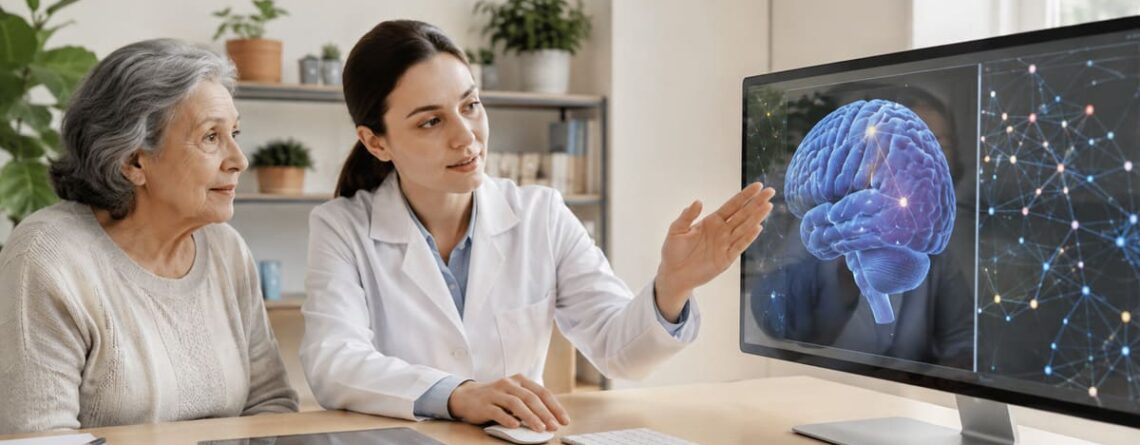
The conversation around artificial intelligence often centres on one question: Will AI replace humans? In cognitive wellness, the more relevant question is: How can AI and human expertise work together? Rather than competing, AI and human intelligence bring complementary strengths to the table. AI excels at analysing vast amounts of information, identifying patterns and automating repetitive tasks. Humans contribute clinical expertise, emotional intelligence, ethical reasoning and the ability to understand the broader context behind every individual’s cognitive journey.
For example, an AI-powered cognitive assessment may identify subtle changes in memory or processing speed over several months. However, interpreting those results requires more than numbers alone. A healthcare professional considers factors such as recent life events, stress, sleep quality, medication use, underlying medical conditions and family history before determining the most appropriate next steps. Similarly, caregivers often notice behavioural changes that technology may not immediately recognise. Their observations, combined with AI-generated insights, create a more complete understanding of an individual’s cognitive health. The future of cognitive wellness is therefore not about choosing between AI and people. It is about using both together to deliver better outcomes.
The Science Behind Human Decision-making
The human brain is remarkably sophisticated. Every decision we make is influenced by a combination of memory, emotions, previous experiences, intuition and reasoning. These elements interact continuously, allowing people to adapt to changing environments and make judgements even when information is incomplete. Artificial intelligence operates differently. It analyses data, identifies statistical relationships and generates predictions based on patterns it has learned. While this enables AI to perform many tasks efficiently, it does not possess genuine understanding, consciousness or lived experience.
This distinction is particularly important in healthcare. Two individuals with similar cognitive assessment results may require entirely different recommendations because of differences in lifestyle, emotional wellbeing, education, cultural background or personal priorities. Human professionals can interpret these factors and tailor guidance accordingly.
Why Human Oversight Remains Essential
As AI becomes increasingly integrated into healthcare, experts emphasise the importance of maintaining human oversight. Human involvement helps ensure that AI-generated recommendations are:
- Interpreted within the appropriate clinical context.
- Reviewed for accuracy and relevance.
- Considered alongside patient preferences and goals.
- Applied ethically and responsibly.
- Adjusted when new information becomes available.
This collaborative approach also helps reduce the risk of over-reliance on automated systems. AI can support decision-making, but it should not replace professional judgement or meaningful conversations between individuals and their healthcare providers.
The Future Of Cognitive Wellness
Advances in neuroscience, digital health and artificial intelligence are creating exciting opportunities for earlier intervention, more personalised support and improved long-term monitoring of cognitive health.
In the future, AI may help:
- Detect subtle cognitive changes before symptoms become noticeable.
- Personalise brain-training programmes in real time.
- Analyse data from wearable devices to identify lifestyle patterns affecting cognition.
- Support researchers in developing new interventions for cognitive decline.
- Improve access to cognitive assessments in underserved communities.
At the same time, human expertise will continue to guide how these technologies are developed, validated and applied in real-world settings. Successful cognitive wellness programmes will combine technological innovation with compassionate, person-centred care.
How Recallloop Brings AI And Human Intelligence Together
At RecallLoop, technology is designed to enhance, not replace human expertise. AI-powered tools can help individuals monitor cognitive performance, identify trends and receive personalised recommendations based on their progress. However, these insights are most valuable when combined with scientific research, clinical knowledge and an understanding of each person’s unique goals and circumstances.
This balanced approach recognises that cognitive wellness is deeply personal. Every individual’s brain is shaped by genetics, lifestyle, education, environment and life experiences. By combining intelligent technology with evidence-based principles and human-centred design, RecallLoop aims to support people in maintaining cognitive health throughout life.
Key Takeaways
- Artificial intelligence is transforming cognitive wellness through advanced data analysis and personalisation.
- AI can support cognitive assessments, brain training and long-term monitoring.
- Human expertise remains essential for empathy, ethical decision-making, creativity and contextual understanding.
- The most effective cognitive care combines AI-powered insights with professional judgement.
- Human oversight helps ensure AI is used safely, responsibly and in ways that benefit individuals.
- The future of brain health lies in collaboration between technology and people, not competition.
FAQ (Frequently Asked Questions)
-
What is cognitive wellness & how is AI used in cognitive wellness?
Cognitive wellness refers to maintaining healthy mental abilities such as memory, attention, learning, reasoning and decision-making throughout life. AI is used to analyse cognitive data, personalise brain-training programmes, monitor progress and support research into brain health. -
Can AI diagnose cognitive disorders?
AI may assist in identifying patterns associated with cognitive decline, but diagnosis should always be made by qualified healthcare professionals using comprehensive clinical assessments. -
Why can’t AI replace human expertise?
AI analyses data effectively but cannot replicate empathy, ethical judgement, lived experience, creativity or the nuanced understanding required for personalised healthcare. -
How do healthcare professionals use AI?
Healthcare professionals use AI as a decision-support tool to complement clinical expertise, improve efficiency and provide more personalised care. -
Is AI accurate in cognitive assessments & can it personalise brain-training exercises?
AI can improve consistency and identify subtle patterns, but its results should be interpreted alongside clinical evaluation and individual circumstances. Yes. Many AI-powered platforms adapt the difficulty and content of exercises based on an individual’s performance and progress. -
What role do caregivers play alongside AI?
Caregivers provide valuable observations about behaviour, daily functioning and emotional wellbeing that AI alone cannot fully capture. -
Will AI replace neurologists or psychologists?
Current evidence suggests AI is more likely to only support healthcare professionals than replace them, improving decision-making while leaving final clinical judgement to human experts, after all only Brain can process final authentic outcome. -
What is the future of AI in brain health?
AI is expected to enhance early detection, personalise interventions, improve long-term monitoring and accelerate research, while continuing to rely on human expertise for interpretation and care.
DISCLAIMER: The content of this article is intended solely for general informational purposes and is not a substitute for professional medical consultation, diagnosis, or treatment. Always seek the advice of your doctor or another qualified healthcare professional regarding any medical concerns.