Cravings Aren’t Random when you are carrying: The Brain Science Behind it!!
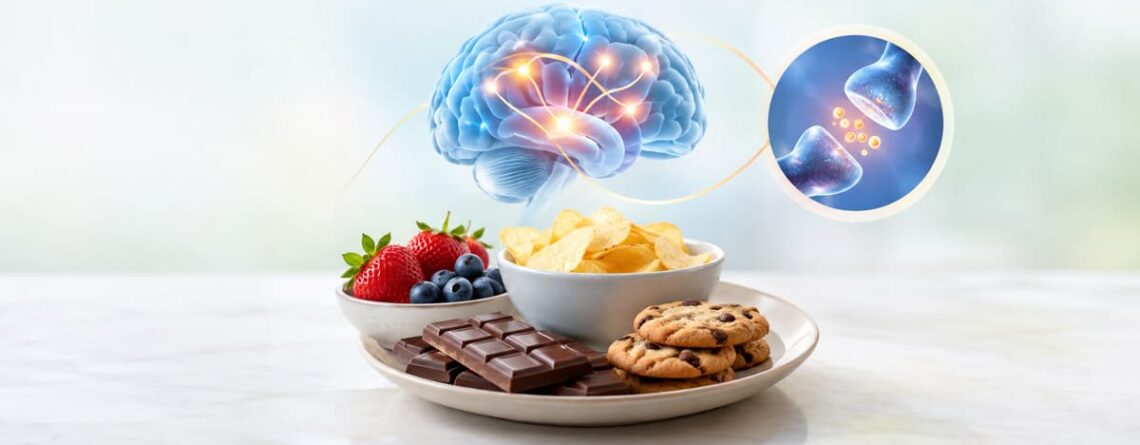
Pickles, ice cream, sour fruit, chocolate, salty snacks or a very specific meal at an inconvenient hour; pregnancy cravings are often treated as a humorous side effect of pregnancy. Yet they can be much more intense than simply “wanting a snack.” Pregnancy cravings are unlikely to be caused by a single nutrient deficiency or one “craving hormone”; instead, they appear to emerge from an interplay of hormonal and metabolic changes, sensory processing, learning, emotion, appetite regulation and the brain’s reward circuits. A major clue came in September 2026, when researchers found in mice that pregnancy-related food-craving-like behaviour was associated with increased activity of the SK3 potassium channel in serotonin-producing neurons in the dorsal raphe nucleus. This increased SK3 activity suppressed neuronal firing and altered serotonin signalling toward reward-related brain regions, potentially changing how strongly rewarding foods motivate behaviour. The finding offers an intriguing biological explanation for why certain cravings can feel so compelling, although this mechanism has not yet been established as the cause of pregnancy cravings in humans.
Decoding Maternal Food Cravings: More Than “Your Body Needs It”
It is tempting to assume that every craving is a nutritional message. For example, that craving meat automatically means low iron or craving chocolate means the body needs magnesium. Science does not support such a simple decoding system. Pregnancy cravings are influenced by physiological, psychological, environmental and cultural factors, and cravings for highly palatable foods can become particularly prominent.
Pregnancy produces major changes in oestrogen, progesterone, metabolic hormones and energy requirements. At the same time, nausea and food aversions can change which foods feel acceptable. Smell and taste can become unusually important, while sleep disruption, stress and emotional state can further influence eating behaviour. The result is a constantly shifting system in which the brain evaluates both the body’s internal state and the expected reward of available foods.
This matters because a craving is not the same thing as a deficiency signal. Some cravings may coincide with nutritional needs, but the presence of a craving alone cannot diagnose an iron, vitamin or mineral deficiency. Persistent cravings for non-food substances, however, are different and may warrant clinical evaluation.
The New Clue: Suppressed Serotonin Firing
The most striking recent discovery concerns serotonin. Serotonin is involved in many functions, including mood, appetite, satiety, sensory processing and behavioural regulation. The new study found that pregnancy in mice reduced the firing activity of serotonin-producing neurons in the dorsal raphe.
Importantly, this does not mean that researchers simply measured “low serotonin levels” in pregnancy. They identified a change in the electrical firing of specific serotonin neurons. That distinction is important because serotonin biology is much more complicated than a single brain-wide concentration that rises or falls.
The researchers found that the suppression of dorsal-raphe serotonin firing was associated with increased activity of SK3, a small-conductance calcium-activated potassium channel. Potassium channels help regulate the electrical excitability of neurons. In this model, greater SK3 activity made the serotonin neurons less likely to fire. The result can be thought of as a neural braking system becoming quieter: when the serotonin neurons fired less, food-craving-like behaviour became stronger.
The SK3 Potassium Channel Switch
The SK3 finding is particularly interesting because the researchers did more than observe a correlation. They experimentally manipulated the channel in mice. When SK3 was selectively removed from serotonin neurons in the dorsal raphe, the pregnancy-associated reduction in neuronal firing was prevented and food-craving-like behaviour decreased. Conversely, increasing SK3 expression in serotonin neurons of non-pregnant female mice produced changes resembling pregnancy-associated craving behaviour.
That experimental sequence strengthens the case that SK3 participates in the mechanism in mice. It does not, however, establish that SK3 is the cause of pregnancy cravings in humans. This distinction is central to responsible health communication. The study provides a mechanistic animal model, not a human diagnostic test. It tells researchers where to look next.
Dorsal Raphe and the Serotonin-to-Reward Connection
The dorsal raphe is one of the brain’s major serotonin-producing hubs. Its neurons send projections throughout the brain, allowing serotonin signalling to influence networks involved in emotion, motivation, appetite and behavioural control.
The 2026 study identified a particularly important connection from dorsal-raphe serotonin neurons toward the ventral tegmental area (VTA), a major component of the brain’s reward and motivation circuitry. Experimentally activating this serotonin pathway reduced food-craving-like behaviour in pregnant mice.
This provides a possible circuit-level explanation for how pregnancy-related changes in serotonin neurons could influence food motivation. Rather than thinking of serotonin as simply an “appetite chemical,” it is more accurate to view serotonin signalling as one component of a network that can alter the motivational value assigned to food.
Reward Circuit Rewiring During Pregnancy
The SK3-serotonin discovery builds on earlier research showing that pregnancy can alter reward circuitry. In a 2022 Nature Metabolism study, pregnant mice displayed food-craving-like episodes accompanied by changes in connectivity involving mesolimbic dopamine pathways. Dopamine D2-receptor-expressing neurons in the nucleus accumbens, a key reward structure, were found to influence these craving-like behaviours.
Together, these findings suggest that pregnancy may reshape several interconnected systems rather than simply turning appetite “up.” Serotonin-related signalling from the dorsal raphe and dopamine-related signalling within reward circuitry may interact with sensory, metabolic and hormonal signals to influence which foods become especially motivating. The phrase “reward circuit rewiring” should therefore be interpreted cautiously. The research demonstrates changes in circuit activity and connectivity in animal models; it does not establish that the human maternal brain is permanently rewired by cravings.
Brain Regions Behind a Craving
A craving can recruit several systems simultaneously. The hypothalamus helps integrate physiological signals related to energy balance and feeding. The insula contributes to taste, bodily sensations and the subjective experience of craving. The amygdala and hippocampus can connect foods with emotional memories and learned associations, while the prefrontal cortex contributes to attention, decision-making and behavioural control. The nucleus accumbens and VTA participate in reward, motivation and reinforcement, while the dorsal raphe contributes serotonin signalling that can influence these processes.
Pregnancy changes the hormonal and metabolic environment in which these systems operate. That may help explain why the same food can feel unusually compelling during pregnancy even when it was unremarkable beforehand.
Are Cravings Helpful or Harmful?
A craving itself is not automatically unhealthy. A person can crave fruit, yogurt, nuts or a particular carbohydrate-rich food and still have a balanced diet. The clinical question is what happens when cravings repeatedly push eating patterns toward large amounts of highly processed, energy-dense foods.
Frequent consumption of highly palatable foods can contribute to excessive gestational weight gain, and metabolic health during pregnancy is clinically important. Yet it would be misleading to blame the brain for every dietary difficulty. Food availability, culture, nausea, sleep, stress, socioeconomic circumstances, eating patterns before pregnancy and individual metabolic health all contribute.
Pregnancy also changes the body’s nutritional requirements, making adequate overall nutrition more important than trying to suppress individual cravings.
What Clinicians Should Take From the New Neuroscience
The SK3 discovery is scientifically exciting, but it does not currently change routine prenatal care. There is no clinical test for “pregnancy craving circuitry,” no approved treatment targeting SK3 for cravings, and no evidence that pregnant people should attempt to manipulate serotonin or reward pathways themselves.
Clinical care remains focused on adequate nutrition, appropriate gestational weight gain, metabolic health, food safety, management of nausea and vomiting, and identification of nutritional deficiencies or eating-related concerns when indicated. Current obstetric guidance emphasizes a varied diet containing essential nutrients rather than “eating for two.”
Cravings, Deficiencies and Pica Are Not the Same Thing
One of the most important clinical distinctions is between ordinary food cravings and pica, the persistent desire to consume non-food substances such as soil, clay, starch or other non-nutritive materials. Pica during pregnancy can be associated with nutritional or medical issues and deserves discussion with a healthcare professional rather than being treated as an amusing version of a food craving.
Iron deficiency is particularly important during pregnancy because iron requirements increase substantially. However, a craving alone cannot establish iron deficiency. Laboratory assessment and clinical evaluation are more appropriate than self-diagnosing based on cravings.
What About Gestational Diabetes?
The relationship between cravings and metabolic health is also becoming a research target. A 2026 study of 39 pregnant women; 18 with untreated gestational diabetes and 21 healthy controls, examined brain responses while participants viewed food images. Researchers found differences in early brain responses to high- versus low-fat food cues between the groups, with responses in the gestational-diabetes group related to HbA1c levels.
The study was small and does not show that gestational diabetes causes abnormal cravings. It does, however, provide evidence that metabolic health may influence how the pregnant brain processes food cues.
What Pregnant People Can Actually Do
The neuroscience does not call for fighting every craving. A more practical approach is to acknowledge cravings without allowing them to become the sole basis of dietary decisions. When possible, a strongly desired food can be incorporated into an overall balanced eating pattern while meals continue to provide protein, fibre, fruits and vegetables, whole grains, healthy fats and other nutrients appropriate for pregnancy.
Persistent nausea, inability to maintain adequate intake, recurrent pica, rapid excessive weight changes, symptoms of disordered eating or concerns about blood glucose should be discussed with an obstetric clinician or qualified dietitian. Pregnancy is not the time to use extreme restriction or unproven supplements to “correct” brain chemistry.
Neuroplasticity: A Changing Brain, Not a Broken Brain
Pregnancy involves substantial neurobiological adaptation. Changes in hormones, metabolism, sensory processing, motivation and neural networks reflect the brain responding to a dramatically altered physiological environment. Changes in reward processing should therefore not automatically be interpreted as pathology.
The emerging neuroscience is better understood as a story of adaptation. Some adaptations may make certain foods more motivating, while others may increase attention to maternal and foetal health. The precise balance differs between individuals and may change across pregnancy and after birth.
Recent Research Highlights
The most important recent development is the September 2026 Nature Neuroscience study identifying increased SK3 activity, suppressed dorsal-raphe serotonin firing and altered dorsal-raphe-to-VTA signalling in pregnant mice. Earlier work had already implicated dopamine D2 signalling in the nucleus accumbens and broader mesolimbic reward-circuit changes in pregnancy-related food-craving-like behaviour. A 2025 review integrating human and experimental evidence concluded that pregnancy cravings arise from interacting cognitive, emotional, physiological, hormonal and cultural factors rather than one isolated mechanism.
Recent Clinical Studies & Surveys
Human evidence remains considerably less developed than animal neuroscience. Recent work is beginning to examine food-cue processing directly in pregnant populations, including differences associated with gestational diabetes. Clinical research continues to focus on how cravings relate to gestational weight gain, metabolic health, nausea and vomiting, dietary quality and maternal well-being. The major gap is that researchers still cannot translate the detailed circuit mechanisms discovered in mice directly into an explanation of an individual pregnant person’s cravings.
Real-World Perspective
The next time a pregnant person suddenly wants one very specific food, the most scientifically accurate explanation is not that the foetus “ordered” it or that the body necessarily identified a missing nutrient. A more useful interpretation is that pregnancy has changed the biological context in which the brain evaluates food. Hormones, metabolism, sensory signals, learned associations and reward circuitry are interacting and new animal research suggests that serotonin neurons themselves may become electrically less active through an SK3-dependent mechanism.
For some pregnant women, a craving can feel less like ordinary hunger and more like a very specific message from the brain. In a study of 68 pregnant women receiving prenatal care at the University of North Carolina–Chapel Hill, participants described cravings as urgent, highly specific and sometimes difficult to resist. One woman recalled wanting a particular hamburger so strongly that she refused other meal options until she could get it, while others reported intense cravings for chocolate, ice cream, chips and particular foods or restaurants. These experiences show that pregnancy cravings are not simply about being “hungry for two.” They can involve attention, reward, emotion, memory and learned food associations. Scientists are still working out exactly how hormonal and neural changes during pregnancy contribute to these experiences, but the lived experiences of pregnant women make one thing clear: a craving can feel surprisingly powerful because the brain is part of the story.
Future of Pregnancy-Craving Research
The biggest unanswered question is whether the SK3–dorsal raphe–VTA pathway operates similarly in humans. Future studies will need to determine whether pregnancy alters SK3 activity in human serotonin neurons, whether comparable changes can be detected through non-invasive biomarkers or imaging, how these mechanisms differ between individuals, and whether they vary across pregnancy and postpartum.
Researchers will also need to connect molecular mechanisms with real-world outcomes. Do particular craving patterns correspond to metabolic changes? Does sleep or stress modify the circuit? How do oestrogen, progesterone, insulin, leptin and other pregnancy-related signals interact with serotonin and dopamine systems? Could differences in these pathways help explain why one person craves sweets while another develops strong aversions to previously favourite foods?
These questions could eventually lead to more individualized nutritional and behavioural interventions. For now, however, the SK3 discovery should be viewed as a promising mechanistic clue, not a new clinical treatment or explanation for every pregnancy craving.
Key Takeaways
- Pregnancy cravings arise from interacting hormonal, metabolic, sensory, emotional, cognitive and reward processes.
- A craving does not automatically indicate a nutritional deficiency.
- New 2026 mouse research found suppressed firing of dorsal-raphe serotonin neurons during pregnancy.
- Increased activity of the SK3 potassium channel was linked to this reduced neuronal firing.
- Manipulating SK3 changed food-craving-like behaviour in pregnant and non-pregnant mice.
- Serotonin projections from the dorsal raphe to the VTA appear to influence food-craving-like behaviour in mice.
- Earlier research implicated dopamine D2 signalling and the nucleus accumbens in pregnancy-related food-craving-like behaviour.
- These mechanisms have not yet been established as the cause of cravings in humans.
- Pica and persistent cravings for non-food substances deserve clinical attention.
- Balanced nutrition and appropriate prenatal care remain more important than trying to suppress individual cravings.
- Future research may reveal how serotonin, dopamine, hormones and metabolic signals interact during pregnancy.
FAQ (Frequently Asked Questions)
-
Why do pregnancy cravings happen?
They probably arise from several interacting processes, including hormonal and metabolic changes, sensory alterations, reward processing, emotions, learned food associations and environmental factors. -
Does a craving mean my body is missing a nutrient?
Not necessarily. Some cravings may occur alongside nutritional needs, but cravings alone cannot diagnose a deficiency. -
What is the SK3 potassium channel & the dorsal raphe?
SK3 is a small-conductance calcium-activated potassium channel that helps regulate neuronal excitability. In the 2026 mouse study, increased SK3 activity in dorsal-raphe serotonin neurons reduced their firing.
The dorsal raphe nucleus is a major source of serotonin-producing neurons and communicates with multiple brain systems involved in emotion, motivation and behavioural regulation. -
Does pregnancy lower serotonin?
The new study found reduced firing of specific serotonin neurons in pregnant mice. That should not be interpreted as proof that pregnancy universally lowers serotonin levels in the human brain. -
Is dopamine responsible for pregnancy cravings?
Dopamine is part of the brain’s reward and motivation circuitry, and animal research has implicated dopamine D2 signalling in pregnancy-related food-craving-like behaviour. It is not the only mechanism involved. -
Are pregnancy cravings dangerous?
Ordinary food cravings are not inherently dangerous. Problems can arise when they contribute to a persistently unbalanced diet, excessive gestational weight gain or other nutritional or metabolic concerns. -
What if I crave non-food substances?
Persistent cravings for substances such as clay, soil or other non-food materials may represent pica and should be discussed with a healthcare professional. -
Can I take something to change serotonin or SK3 and reduce cravings?
No self-directed treatment targeting serotonin or SK3 should be used for pregnancy cravings. The SK3 findings are currently experimental animal research. -
Do pregnancy cravings affect the baby’s brain?
There is not enough human evidence to say that an individual mother’s craving directly changes foetal brain development. Maternal nutrition and metabolic health do matter, which is why balanced prenatal nutrition remains important. -
<Will pregnancy permanently rewire the brain’s reward system?
Current evidence supports substantial neural adaptation during pregnancy, but the available animal studies do not establish that pregnancy permanently rewires human reward circuitry. -
What is the most important message about pregnancy cravings?
Cravings are biological, not a failure of willpower. Understanding the brain may explain their intensity, but care should prioritize balanced nutrition, maternal health and proper prenatal guidance.
DISCLAIMER: The content of this article is intended solely for general informational purposes and is not a substitute for professional medical consultation, diagnosis, or treatment. Always seek the advice of your doctor or another qualified healthcare professional regarding any medical concerns.