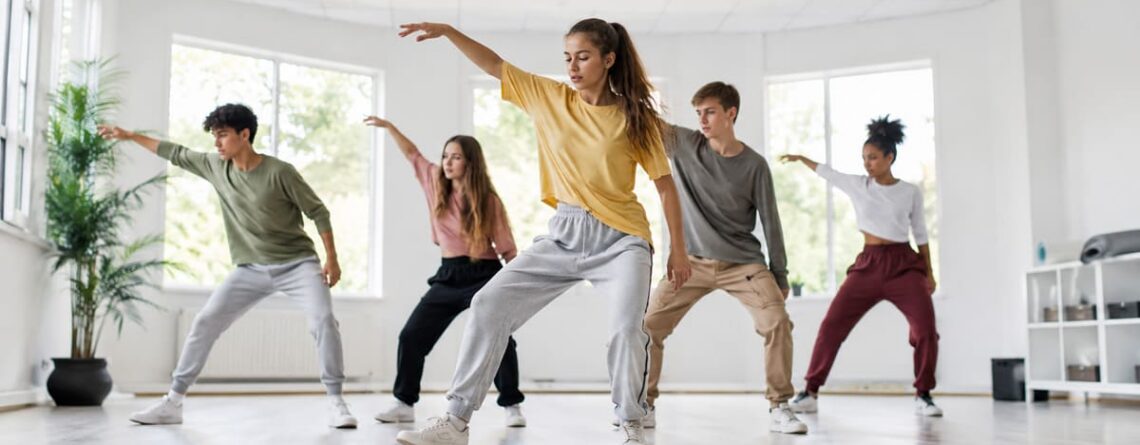
Is Dance Secretly a Brain Workout in Disguise?
Dance is more than physical exercise. It combines movement, rhythm, memory, attention, coordination, music, decision-making and often social interaction. Because adolescence is a period of continuing brain development, these demands may engage several cognitive and emotional systems at once. Research suggests that dance and other cognitively engaging physical activities can support aspects of executive function and wellbeing in young people, although direct evidence specifically proving that dance permanently changes the teenage brain remains limited.
Brain Dance??
A teenager learning a dance routine is doing far more than remembering choreography. The brain must listen to rhythm, remember sequences, predict what comes next, coordinate the body, monitor mistakes and adjust movements; all while responding to music and sometimes synchronizing with other people. That makes dance an unusually rich form of cognitive-motor activity.
This matters during adolescence because the brain is still refining networks involved in planning, attention, self-control and decision-making. Dance cannot be described as a guaranteed “brain booster,” but it provides an interesting window into how physical activity, learning and social experience can overlap.
What Happens in the Brain When a Teenager Dances?
Dance requires continuous communication between sensory, motor and cognitive systems. Movement information is processed through networks involving motor and premotor regions, the cerebellum and basal ganglia, while attention, planning and behavioural control involve broader frontoparietal and prefrontal networks. Music adds auditory and emotional processing, creating an unusually integrated task.
A 2023 systematic review in Neuroscience & Biobehavioural Reviews identified 133 original neuroscience studies of dance and concluded that dance and music engage overlapping networks involved in perception, action and emotion. However, the researchers also emphasized that the neuroscience of dance remains a relatively small field and that the social, interactive and collective aspects of dancing have been understudied.
Why Dance Can Be a Cognitive Workout
A dance sequence effectively turns movement into a constantly changing problem. A teenager may need to remember eight counts, inhibit an automatic movement, switch direction, anticipate a partner’s movement and correct timing within seconds. These demands naturally engage several cognitive skills.
- Working memory: Holding steps and sequences in mind while performing them.
- Attention: Monitoring rhythm, instructions, surroundings and body position.
- Executive function: Planning, inhibiting incorrect responses and switching between movements.
- Processing speed: Responding quickly to changing musical or movement cues.
- Cognitive flexibility: Adapting when choreography changes or a mistake occurs.
- Learning: Repeated practice gradually transforms consciously controlled movements into more efficient routines.
- Decision-making: Improvisation requires selecting movements and responding to changing conditions.
A 2023 network meta-analysis comparing different physical-activity types in children and adolescents found that dance performed particularly well for updating accuracy and reducing shifting reaction time, although the effectiveness varied according to the cognitive outcome and activity type. These findings support the idea that cognitively demanding movement may offer benefits beyond simply increasing physical activity.
Dance, Memory and the Learning Loop
Dance creates a particularly interesting memory challenge because information is stored in more than one form. A teenager may remember the verbal instruction, the rhythm, the sequence of movements and the physical sensation of performing them. Repetition strengthens familiarity with the routine, while feedback helps refine errors.
This does not mean that learning choreography automatically improves every form of memory. Research on cognitive training shows that improvements are often strongest for skills similar to the trained task, with broader “far-transfer” effects being less consistent. The more defensible conclusion is that dance gives young people repeated opportunities to practice memory in a meaningful, embodied context.
The Teenage Brain Connection
Adolescence involves continuing maturation of brain systems supporting executive control and complex decision-making. Physical activity may interact with these developmental processes through several pathways, including cardiovascular fitness, neurotrophic signalling, mood regulation and opportunities for learning.
A systematic review of randomized controlled trials examining longer-term physical activity interventions in young people found evidence of cognitive and mental-health benefits alongside changes in frontal brain activity measured through methods such as fMRI and EEG. The review also discussed associations with brain-derived neurotrophic factor (BDNF), a molecule involved in neuronal plasticity. However, these findings apply to physical activity broadly rather than proving that dance uniquely produces the observed neural changes.
Does Dance Actually Change the Brain?
This is where scientific caution matters. A 2019 systematic review examined 1,071 records and included eight studies investigating dance and neuroplasticity. The included studies reported structural or functional changes, including findings involving hippocampal volume, grey matter and white-matter integrity. However, most participants were adults rather than adolescents.
Therefore, it would be an overstatement to tell teenagers that dance will “rewire their brains.” The research supports the possibility that sustained, complex movement can contribute to neural adaptation, but the precise effects of adolescent dance training and how they compare with other forms of exercise or skill learning, remain active research questions.
Real-World Perspective: The Teenager Who Learns Through Movement
Consider a teenager preparing for a group performance. During rehearsal, they repeatedly remember sequences, correct timing errors, watch other dancers, adjust to changes in spacing and manage the pressure of performing in front of others. The brain is simultaneously dealing with memory, movement, attention, social information and emotional regulation. This is an illustrative example, not a documented patient case, but it captures why dance can be considered a cognitively demanding activity rather than simply a form of exercise.
An Overlooked Insight: The Social Brain Is Part of the Dance
Dance is often studied as an individual motor activity, yet real-world dancing is frequently social. Group choreography requires people to predict one another’s movements, synchronize timing and continuously monitor shared space. Interestingly, the 2023 neuroscience review identified the collective and interactive aspects of dance as an important research gap. Researchers noted that surprisingly little neuroscience research has directly examined people dancing together, despite interpersonal synchronization being central to many forms of dance.
That gap matters because social coordination may be one of dance’s most distinctive features. A teenager is not merely controlling their own body; in many settings, they are learning to coordinate their actions with other minds and bodies.
Dance and Emotional Wellbeing
Dance can also intersect with identity, self-expression and body awareness. A 2018 systematic review examined 24 intervention studies, including 11 involving children and adolescents. The review found reported benefits involving body-related perceptions, self-trust, self-expression and aspects of self-esteem, although quantitative findings concerning self-esteem and self-efficacy were inconsistent and the overall evidence quality varied.
More recent evidence also encourages balance. A 2026 systematic review of mental-health risk factors among pre-professional and professional dancers identified factors including perfectionism, body dissatisfaction, self-esteem and aspects of the dance environment. These findings are particularly relevant because a healthy relationship with dance depends partly on whether the environment emphasizes enjoyment and development or unrealistic appearance and performance standards.
Supporting Brain Health Through Dance
Dance does not need to be competitive or technically demanding to provide cognitive engagement. For adolescents, the most useful approach is likely one that combines enjoyment, challenge, appropriate physical intensity and opportunities for learning. Helpful approaches can include:
- Learning unfamiliar choreography rather than repeating only familiar routines.
- Practicing sequences that gradually increase in complexity.
- Switching between styles or movement patterns.
- Using improvisation to encourage flexible thinking.
- Dancing with others to develop timing and social coordination.
- Allowing adequate recovery rather than treating more training as automatically better.
Dance should complement other foundations of adolescent brain health, including sufficient sleep, balanced nutrition, regular physical activity, social connection and time for recovery.
Neuroplasticity: What Can We Reasonably Say?
Neuroplasticity refers to the brain’s ability to change its structure and function in response to experience. Dance is a plausible stimulus because it combines repeated practice with sensory feedback, motor learning, attention and emotional engagement. However, neuroplasticity does not mean every new dance routine permanently changes the brain. Evidence from adults and broader physical-activity research provides biological plausibility, but adolescent-specific longitudinal research is still needed to determine which changes persist and whether dance produces advantages beyond other cognitively engaging activities.
Recent Research Highlights
2023: Neuroscience systematic review: Foster Vander Elst and colleagues systematically reviewed the neuroscience of dance and identified 133 original studies. The review found overlapping brain networks for music and dance involving perception, action and emotion, while identifying interactive and collective dancing as major research gaps.
2023: Network meta-analysis of physical activity: A comparative analysis found that physical activity can benefit executive functions in children and adolescents, with dance showing particularly strong rankings for updating accuracy and shifting reaction time. Because the analysis compared different activity types and outcomes, it does not establish that dance is universally superior to other exercise.
2025: Mindful movement meta-analysis: A systematic review and meta-analysis of 84 studies involving 11,015 children and adolescents found significant improvements in attention, processing speed, working memory and executive function following mindful-movement interventions. Dance was not the sole intervention category, so these findings should be interpreted as supporting the broader cognitive potential of movement rather than as direct proof of a dance-specific effect.
2026: Adolescent dance pilot: A pilot study involving 18 adolescents receiving psychiatric care examined four weekly dance workshops. Participants with problematic internet use showed lower baseline self-esteem and subsequently demonstrated increases in self-esteem at some workshop time points. The small sample, clinical population and absence of a robust control group make the findings preliminary.
Recent Clinical Studies & Surveys
Direct adolescent dance research remains smaller than the broader literature on physical activity and cognition. A useful evidence base comes from studies examining youth movement more generally. A 2021 systematic review and meta-analysis included 19 trials involving 8,676 children and adolescents and found that higher-quality physical-education interventions improved cognitive performance, although substantial heterogeneity existed between studies.
A 2021 systematic review of physical-activity interventions for adolescents aged 11–19 synthesized 28 interventions. The evidence suggested improvements in psychological wellbeing and quality of life, but findings concerning self-esteem and reductions in mental-health symptoms were less consistent. This distinction is important: physical activity can support wellbeing without being considered a stand-alone treatment for a mental-health disorder.
A 2021 systematic review specifically examining dance among young people analysed 37 studies involving participants aged 6–19. It found that dance classes could reach moderate-to-vigorous intensity at certain points, but most classes did not spend at least half of their duration at that intensity. This means dance can contribute to physical activity, but the health impact depends substantially on how classes are structured.
How Teenagers Can Make Dance More Brain-Engaging
The goal is not to turn dancing into another academic task. Instead, small changes can increase cognitive challenge while keeping it enjoyable:
- Learn: Choose unfamiliar routines rather than relying only on automatic movements.
- Remember: Practice a sequence without immediately watching the instructor.
- Adapt: Change direction, rhythm or sequence once the basic routine is mastered.
- Create: Try improvisation instead of following choreography every time.
- Synchronize: Practice coordinated movement with a partner or group.
- Reflect: Notice which strategies helped you remember difficult sequences.
Key Takeaways
- Dance combines movement, music, memory, attention and decision-making.
- Choreography can challenge working memory, cognitive flexibility and executive control.
- Research supports cognitive benefits from physical activity in young people, but dance-specific adolescent evidence is still developing.
- Neuroplasticity findings from dance research are promising but should not be translated into “dance rewires your brain” claims.
- Dance may support self-expression, body awareness and wellbeing, although mental-health outcomes vary.
- The social side of dance, synchronizing and coordinating with others is an important but understudied area.
- Enjoyment, appropriate challenge and recovery matter more than simply doing more dance.
- Dance works best as one component of a broader healthy lifestyle.
FAQ (Frequently Asked Questions)
-
Does dancing improve the teenage brain?
Research suggests that cognitively engaging physical activity can support aspects of executive function and cognition, but there is not yet enough evidence to say that dance uniquely improves the teenage brain. -
Can dancing improve memory?
Learning choreography repeatedly exercises memory, particularly working and sequence memory. Evidence for broader memory improvement is less certain. -
Does dance improve executive function?
Some comparative research suggests dance can benefit aspects of executive function such as updating and cognitive shifting, although results vary by study and outcome. -
Can dance make teenagers more focused?
Dance requires sustained attention to rhythm, movement and instructions, and broader physical-activity research supports potential benefits for attention. -
Does dance increase neuroplasticity?
Dance is associated with neural adaptations in some studies, particularly in adult research. Whether the same changes occur in teenagers and persist long term remains uncertain. -
Can dance help teenage mental health?
Dance and physical activity may support wellbeing and self-related outcomes, but dance should not be presented as a replacement for professional mental-health treatment. -
Is competitive dance always good for mental health?
Not necessarily. Research among dancers identifies factors such as perfectionism, body dissatisfaction and aspects of the training environment that may increase vulnerability to mental-health difficulties. -
Is learning choreography a form of brain training?
It can be considered a cognitively demanding learning activity because it combines memory, attention, movement and adaptation. However, it should not be equated with clinically validated cognitive rehabilitation. -
Does dancing with other people affect the brain differently?
Possibly. Social synchronization requires people to monitor and coordinate with others, but the neuroscience of collective dancing remains comparatively under-researched. -
How much dance does a teenager need for cognitive benefits?
There is no scientifically established “brain-boosting” dance dose. The most useful approach is regular, enjoyable physical activity that is appropriate for the teenager’s age, ability and health. -
Can dance improve academic performance?
Physical-education research suggests that well-designed movement interventions can support cognition and some academic outcomes, but this does not prove that dance alone improves grades. -
Is dance better for the brain than other exercise?
Not necessarily. Dance has the distinctive advantage of combining physical activity with rhythm, memory, coordination and often social interaction, but current evidence does not justify claiming that it is universally superior to other forms of exercise.
DISCLAIMER: The content of this article is intended solely for general informational purposes and is not a substitute for professional medical consultation, diagnosis, or treatment. Always seek the advice of your doctor or another qualified healthcare professional regarding any medical concerns.